
Post
The Progressive Book Test by Michael O'Brien
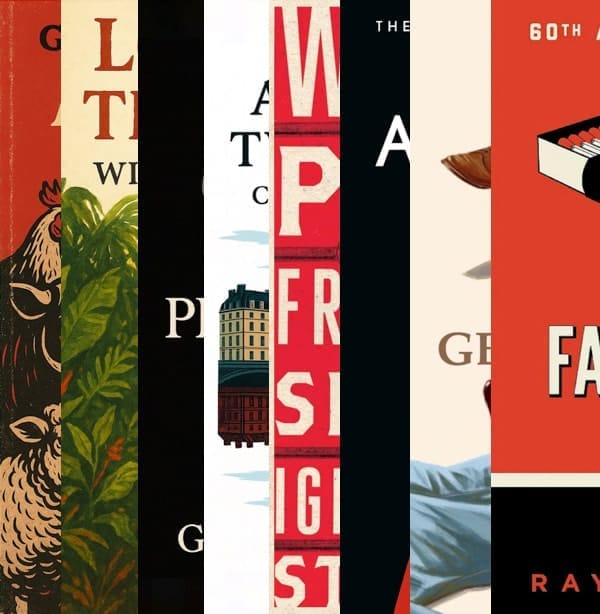
Mentalists love book tests, don’t we? There are so many on the market that it can get overwhelming. I use a form of book test in every show I do. My all time favorite is a set by Drew Backenstoss, which I don’t think he sells anymore. It’s a big part of my stand up shows. However, I’ve been wanting a book test for more casual situations. One that I can pull off the shelf and use without having to refresh myself on the particulars of the methods used.
For me, the most important thing with a book test is that it looks “right.” The book should seem like a real book you’d find in a store. Recognizable titles are a plus.
When I saw Michael’s book test, the first thing that caught my eye was the available titles. All of them are recognizable, and each book looks “right.” The artwork, size, cover texture, and even pages look appropriate for the titles.
There are five “closeup” books, which are 5” by 8” and have a 12pt font size. These are The Gentlemen, 1984, A Tale of Two Cities, Lord of the Flies, and Animal Farm. These books are $50 a piece or $225 for all five books.
There are three “standup” books, which are 6” by 9” and 15pt font. These are Fahrenheit 451, The Handmaid’s Tale, and The Phantom of the Opera. Fahrenheit 451 and The Handmaid’s Tale are $75 a piece, and The Phantom of the Opera is $100 because it’s the only hardcover book and it has an additional reveal built in. You can buy all three stand-up books for $225.
If you want the whole set, it’s $450 for all eight books, and you get a free bonus book that we’ll talk more about later.
The difference between the groups is purely the size of the book and font. The methods are identical across all eight of the books. This means if you buy multiple books, you can have the spectator choose any book, and you’ll know exactly what methods will be used and what words will be forced. This takes a lot of the thinking out of the equation. I can imagine having a bookshelf on stage with these titles and having someone come up and pick any book from the shelf. Or you could have them on your coffee table or a shelf in your house, or plant them in a local coffee shop before a friend shows up and have them pick a book. Throw a few bookmarks and/or dog ears in the books, and now they look totally legit. The books also read legit-ish. Meaning the text seems appropriate for what the story is supposed to be.
The methods put into these books are meant to get progressively more impressive (hence the name of the series). It begins with you revealing a smaller word they choose by saying “stop” on a page and remembering the first word on the page. This is the classic Flashback principle. Then they hand the book to someone else, and that person turns to the very next page and thinks of a word in the first line. You reveal that word, which will be a little more interesting than the previous word. This is the Flashforward principle. Finally, they hand the book to a third person who flips to any page and thinks of any long word, and you can reveal it. This is the MOABT principle. You could also use these books for a tossed out book style presentation.
The book I have is The Phantom of the Opera. You may not know this about me, but I’m an actor, director, and theatre teacher, so this title is especially fitting for my classroom bookshelf, which is where it will live. As I said earlier, this book includes a method in addition to all of the other methods. This book has illustrations at the beginning of each chapter, and it allows you to reveal those images if/when they stop at a chapter heading or one page away from a chapter heading, allowing you to naturally segue to a drawing duplication. All of the information (the flashback, flashforward, and the drawing) is contained in the same location in the peek, so you are getting up to three pieces of information as they look at their first word, which is putting you so far ahead in the routine. The MOABT words are also cribbed on the back of each book in case you need a refresher. These words are actually different lengths, so, in theory, once you know how many letters are in the word, you’ll know the word. But I personally wouldn’t trust a spectator to be able to accurately spell the words while they are counting the letters in their head. I think it’s safer to just use the more traditional approach of getting the first or last letter, which still works with these words. My one complaint about the Phantom of the Opera, in particular, is that the cover is this sort of matte finish that easily picks up fingerprints and grease. It’s not a huge issue, but it’s just something that bugs me.
I mentioned earlier that there is a special ninth book as well. This book can be used in conjunction with any of the other books. It comes as a bonus title if you purchase the entire bundle, but once you’ve bought one of the books, you have the option to buy this ninth book directly from the tutorial page. It’s a hardback version of Moby Dick. This allows you to perform with any of the other books hands-free. You flip through Moby Dick, they call stop, and note the page number they stopped at. They turn to that page in their book, and you’re able to know the flashback word, flashforward word, and even the drawing from Phantom, even though they are opening the book on the opposite side of the stage/room. Basically, this book is a giant crib of all of the information from all of the other books. So while you are calling out the page number, you’re getting your peek of the flashback and flashforward words from within the Moby Dick book. This is an interesting addition that eliminates the sometimes awkward moment of the flashback peek when the book is in your hands.
I’ve also seen that Michael has added a Kpop Demon Hunter book to the lineup as well. This book is totally different from all of the others and has its own routine.
The Progressive Book Test is available here:
Never miss a post! Subscribe now!